
Another Untrue Sorry is a raw, confessional haiku collection that traces one man’s romantic unraveling from the hollow promise of dating apps to the wreckage of betrayal, from the confusion of desire and identity to a final descent into grief and despair.
In spare, unflinching three-line bursts, the poems move through the giddy optimism of a new match, the intoxication of falling too fast, the humiliation of being discarded, and the quiet devastation of loving someone who was never fully his. Along the way, the collection turns its gaze inward — onto masculinity, sexuality, self-sabotage, and the particular loneliness of being a man who processes pain by turning it into art.
Structured in four chapters, Love’s Promises and Tinder’s Lies, And a Vacation Ruins Everything, Love’s Rejections and Recriminations, and Death Not Love Becomes the Poet, this is confessional poetry in the tradition of Sexton and Lowell, compressed into the smallest possible container: seventeen syllables of honesty at a time.
A collection for anyone who has ever loved too hard, too fast, and lost.

That Last First Kiss is a poetry collection about the particular kind of love that arrives like a good pour of rye — warm, sharp, and gone too fast. Structured in four acts, it charts the full arc of a relationship: the electric first meeting across a bar, the slow slide into obsession and betrayal, the seductive pull of strangers when a marriage or partnership starts to fray, and finally, the long, unsparing descent into heartbreak, regret, and self-destruction.
This is confessional poetry in the rawest sense — unguarded, often profane, sometimes cruel, and always honest. The poems move between tenderness and wreckage: a first kiss under a stranger’s gaze, a stolen night in a “dingy hotel room,” a lover’s cigarette ash left behind in a bedside table, a New Year’s Eve spent alone at the bar while “respectable people” make resolutions the speaker no longer believes in. Alcohol runs through every page — not as a device, but as a character in its own right: a companion, a confessor, “the only friend who hasn’t left me yet.”
Readers looking for polished sentiment will not find it here. What they will find is a voice willing to sit in the wreckage of its own choices — infidelity, longing, addiction, loneliness — without flinching or asking for forgiveness. It is a book about how desire and self-destruction so often wear the same face, and about the particular loneliness of choosing the bottle when love has already left the room.
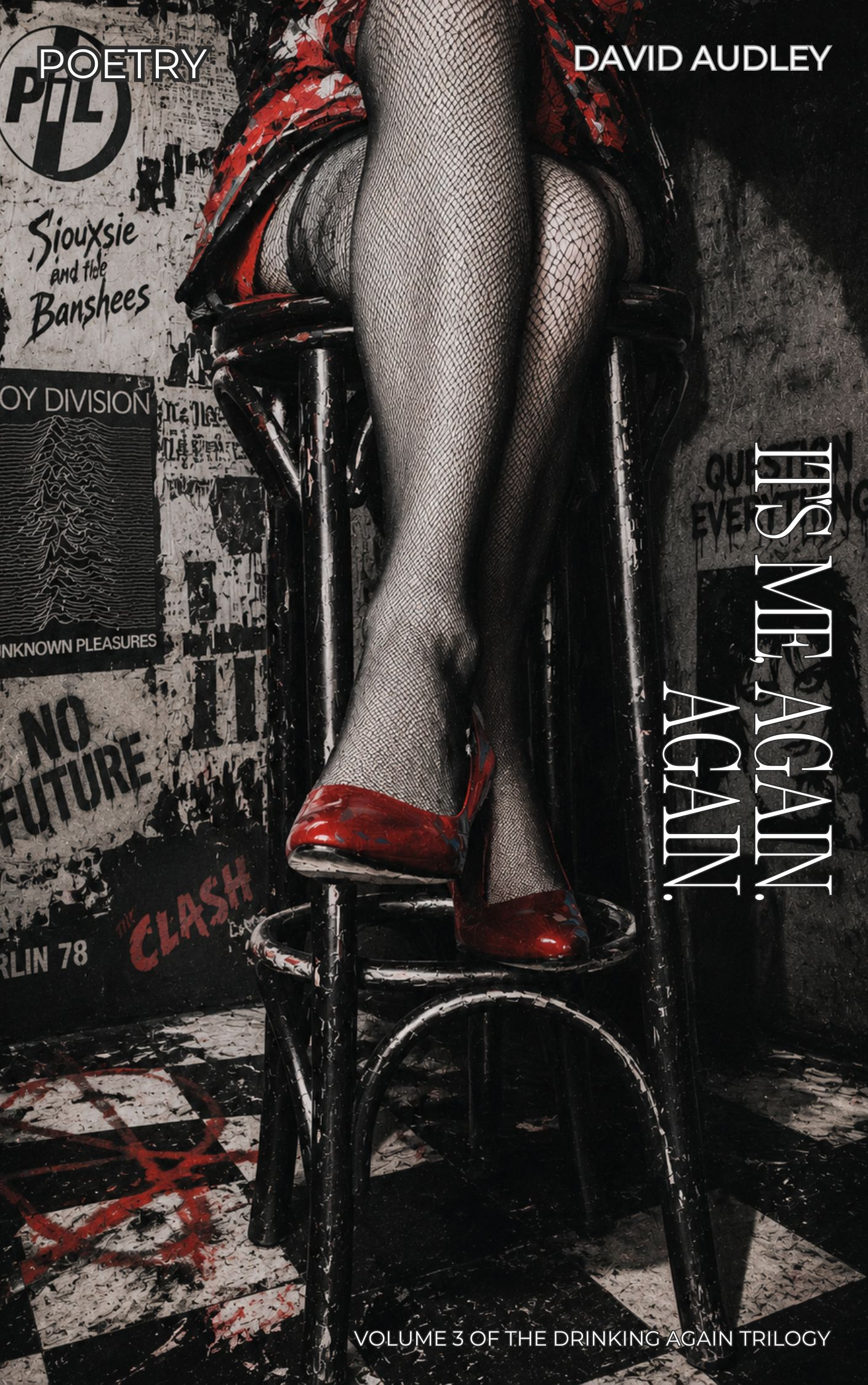
A man writes the same heartbroken poem to the same woman, over and over, and can’t tell anymore whether that’s devotion or damage.
He said he didn’t love her. That was the first lie in a book made almost entirely of them: the ones he told her, and the ones he kept telling himself long after she was gone.
It’s Me, Again. Again. traces a single relationship in real time: the first night, the coffee-stained mornings after, the fight that wasn’t really about the fight, and the years spent trying to replace her with women who only ever reminded him she was gone. He hoards her bra like a warning sign to visitors. He mails her poems she never answers. Every time, he tells himself this letter is the last one.
It isn’t.
It’s Me, Again. Again. is a poetry collection about the specific failure mode of loving someone past the point of usefulness. It opens mid-relationship, tracks its collapse in unsparing physical detail, follows the narrator through a series of rebounds who all fail to be her, and ends where it started: another letter, another “it’s me again.” The narrator is not a reliable or even likable guide to his own heartbreak; he admits to cruelty, to using people, to preferring the ache of loss to the discomfort of moving on. That self-awareness without self-correction is the book’s engine. It’s less interested in healing than in the mechanics of refusing to.